Raku firing

Raku is an ancient Japanese firing technique. After your piece has been bisque fired, a glaze is applied that is suitable for raku firing.

What’s special about raku firing is that the pots are taken out of the kiln when they’re still red-hot, and are then placed directly into a vessel containing wood shavings or sawdust.

When the contents of the vessel catch fire due to the heat of the clay, the vessel is closed and everything is left to smoke for about 10 minutes. In those areas where the clay is not covered by glaze, the pot will turn black as the smoke soaks into the clay, creating a nice contrast with the raku glaze.

The thermal shock causes the glaze to develop hairline cracks, known as craquelé. Very natural, fascinating and wonderfully unpredictable!

Once you’ve experienced raku, you can continue on exploring with naked raku or rako with horsehair.
Check out all of the online courses we offer and dive into the world of clay!

Discover more blog posts here

Pieces of wood and wood ash for ash glaze
Techniques
Nele

Ash glaze

Ash glaze is one of the oldest types of glaze, and it was first used in East Asia.

Grijze ruwe tafellamp
Shapes
Nele

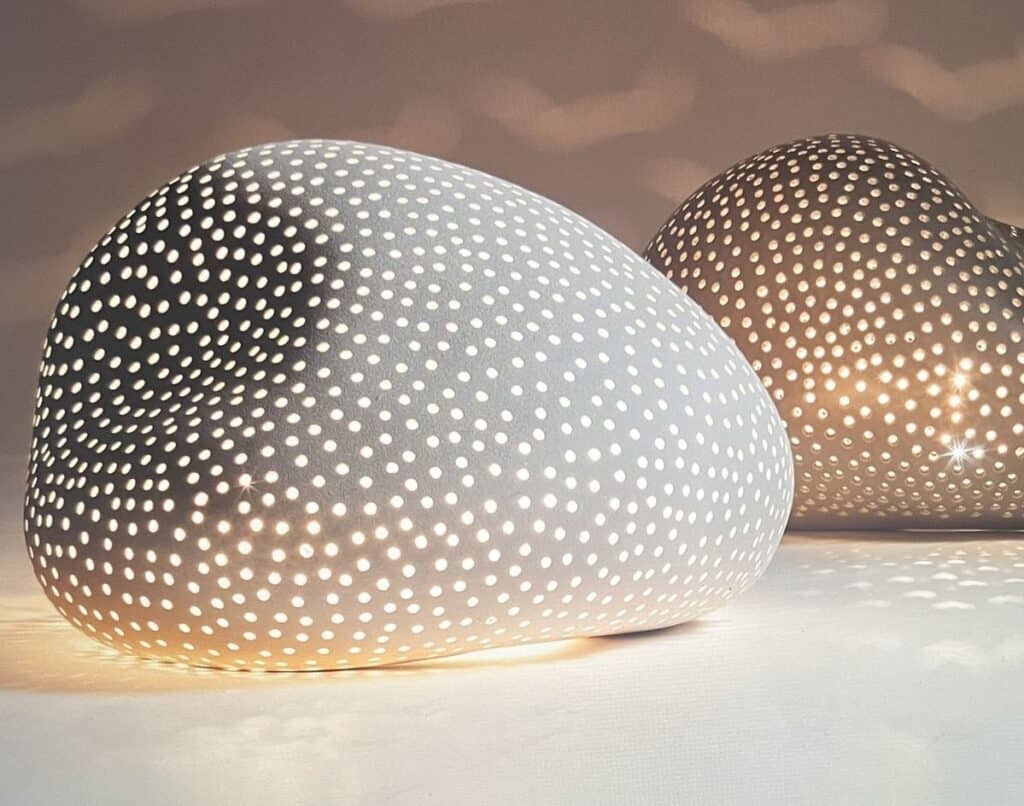
The table lamp

Here’s a fun little project to make out of clay: a table lamp.

A yellow and blue ceramic test plate held in the hands
Articles
Nele

Making test tiles

Testing, testing, testing! It’s unavoidable. For every type of clay that you use, you’ll need to make a test tile. This will help you to chart the shrinkage and colour