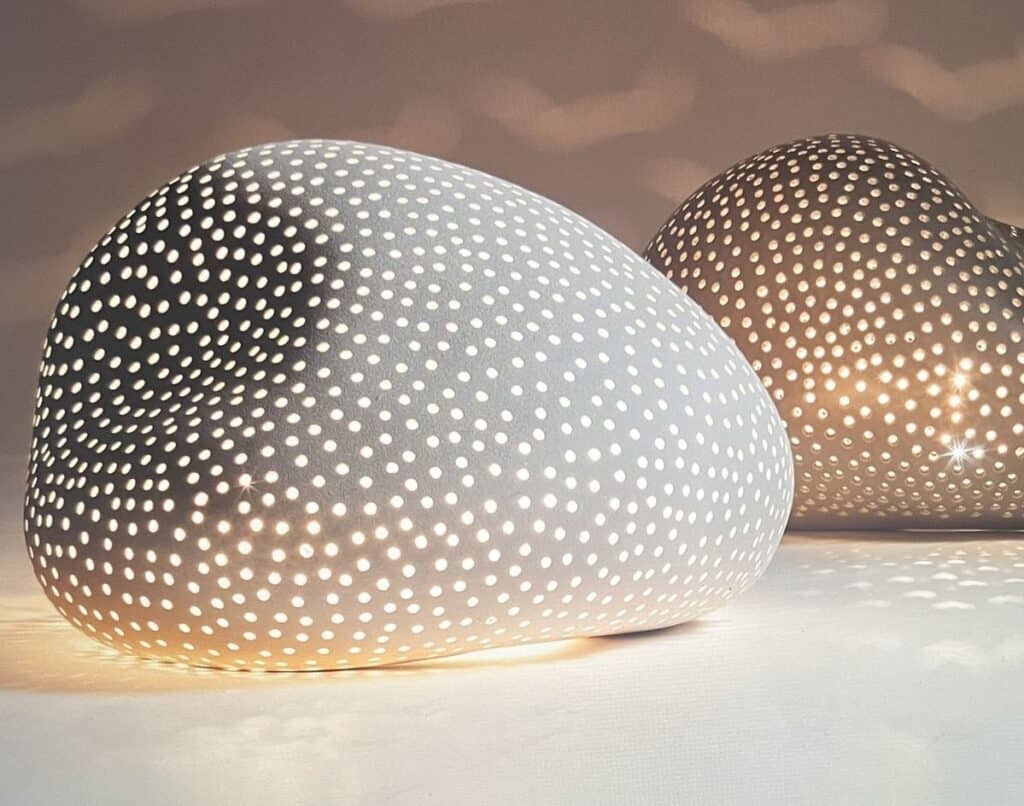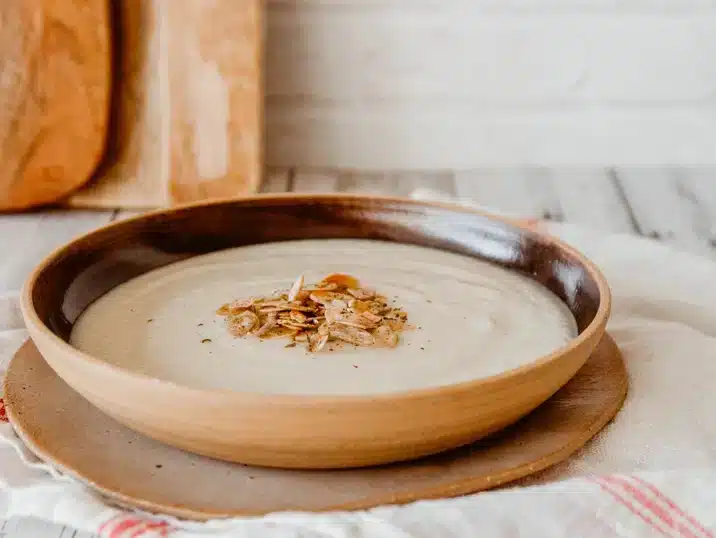
Famous and acclaimed for its beautiful white colour, and sought after for its transparency in thinly thrown or sculpted pieces. It is popular as tableware, and porcelain is often used in industry as well.
Even for the practiced potter, however, porcelain is quite a challenge. Porcelain is more plastic than stoneware or pottery, and takes a lot of practice to master. Porcelain clay feels different from other clays, and is easily too dry or too wet. Where other clays are quick to forgive a wrong move, porcelain is relentless.
But porcelain clay is also wonderfully soft and moves pleasantly with your movements. And with porcelain, you can achieve a delicacy that is with any other type of clay guaranteed to give you a collapsed fiasco. And with the transparency that porcelain can provide, a whole other range of creative possibilities opens up…. Not for beginners, it seems to me, but if you have a knack for throwing: give it a try!