Techniques for wedging clay

Want to prevent cracks and air bubbles in your clay creations? The right wedging technique can lay the perfect foundation for a sturdy, smooth result.
Picture of Nele Ostyn
Nele Ostyn

Forever learning.

Before you can start throwing, you need to prepare your clay properly. This ensures the moisture inthe clay is evenly distributed, there are no air bubbles, and the clay particles are aligned evenly. Wedging is the key. There are various techniques you can use to achieve this.

You need two things for both techniques: a clean work surface, and a piece of clay. If you are using new clay, cut a piece from the pack with your cutting wire,, roughly in the shape of a brick.

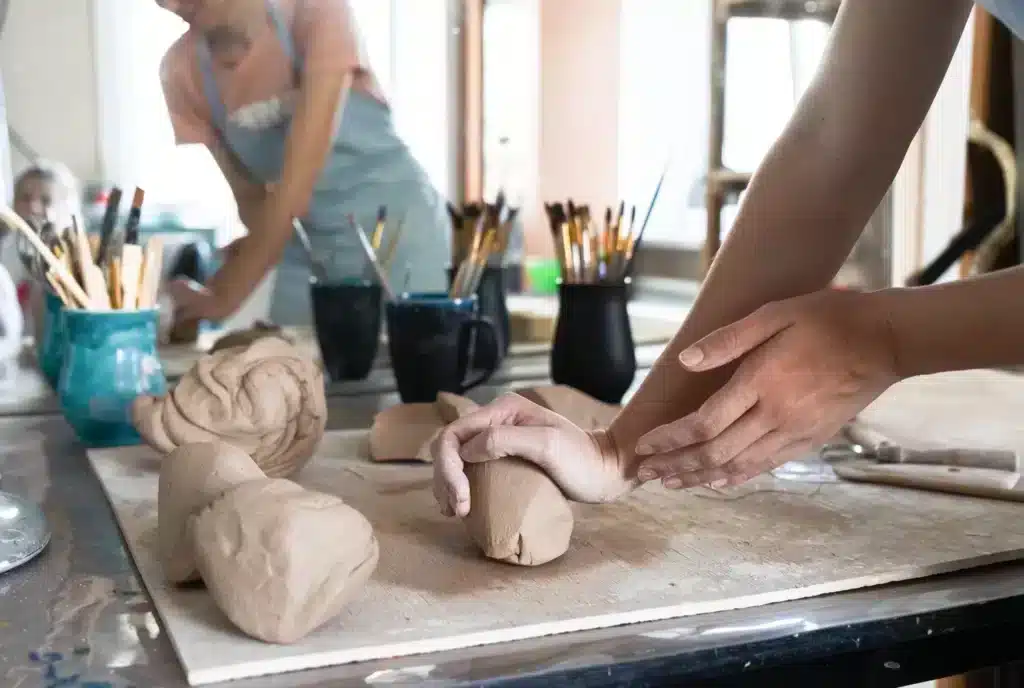
Een persoon kneedt bollen klei op een houten plank

Ram's head wedging

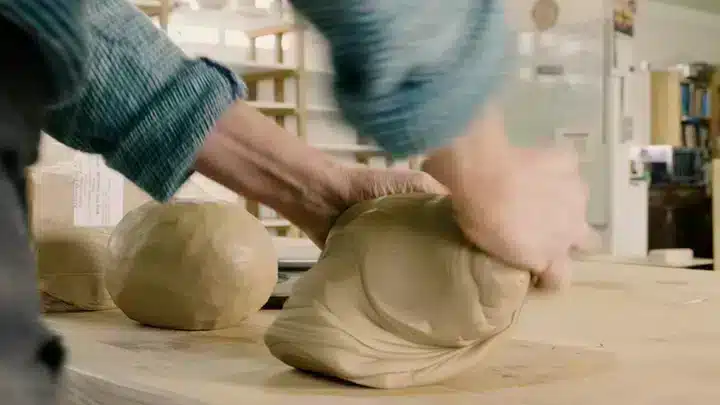
With this method, while wedging, the clay takes on the shape of an ram’s head: two eyes and a nose. Place the brick on its side, with the long side against the work surface. Cup both ends of the brick with the palms of your hands.

Cursist docente Françoise Busin die een bol klei kneedt volgens de ossenkopmethode

Push the clay away from you, against the surface. This will cause the clay to roll over itself. Pay attention, do not push the clay down.

  1. Use the sides of your hands to bring the clay back towards you.
  2. Repeat these steps several times.
  3. Be careful not to fold the clay on itself, as you would do with bread dough. This creates air bubbles in the clay, and that’s exactly what we want to avoid.

Be careful not to fold the clay on itself, as you would do with bread dough. After all, that creates air bubbles in the clay, and that’s exactly what we want to avoid.

Spiral wedging

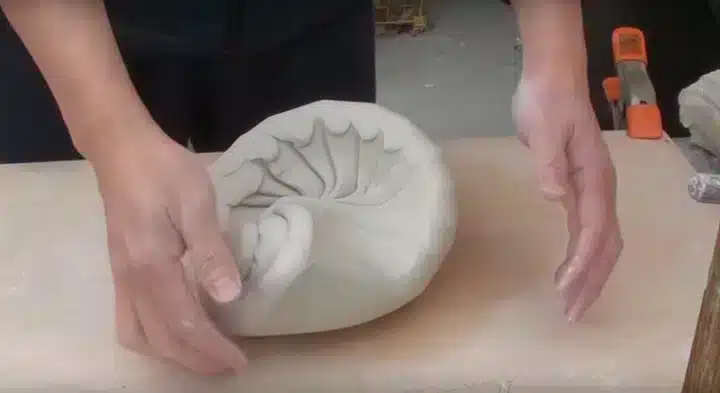
This alternative method involves shaping the clay into the shape of a spiral, or shell.

Twee handen die klei voor keramiek kneden volgens de spiraalmethode
  1. Place the brick on its side with one of the short sides against the work surface. Cup the top of the brick with your palms.
  2. Push the clay away from you, against the surface. his time, however, push at a slight angle to the left, rather than straight ahead.
  3. Use the sides of your hands to pull the clay back towards you while rotating it at the same time.
  4. Repeat these steps several times.

Finishing

Do you want to use the wedged clay for throwing? Then make sure you shape your piece of clay into a nice ball. After all, centring and pulling up clay is difficult enough without bumps and dents. Good luck!

Share this article

Facebook
Twitter
LinkedIn
Pinterest
Email

Check out all of the online courses we offer and dive into the world of clay!

Discover more blog posts here

Een detail van een huisje gemaakt met klei in een herfstige setting met kaarslicht
Shapes
Nele

The little house

It’s something completely different for once: a house, or several houses, out of clay.

Een set van kannen gemaakt van klei
Shapes
Nele

The jug

Coffee jug, tea jug, water jug, anything goes! Thirsty?

benefits of pottery, advantages of making your own ceramics, ceramics making advantages, advantages of pottery, benefits of making ceramics, benefits of pottery making, benefits of making your own ceramics, benefits of making pottery

It’s Cursist’s 5th anniversary, and you get the gift!

  • Take a free mini-course
    ‘Throw your own berry colander’
  • Get 10% off all courses!

Download the free beginner's guide

Start out with ceramics

A handy 27-page PDF with everything you need to know to get started with everything clay.

Enter your details below and you’ll get the guide in your mailbox! You sign up for our bi-weekly newsletter full of ceramic goodies as well.