Kintsugi or the art of repairing

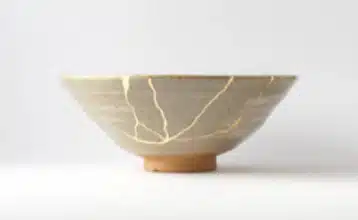
Kintsugi is the Japanese art of repairing shards of ceramic or porcelain with gold or silver lacquer.
Picture of Nele Ostyn
Nele Ostyn

Forever learning.

The art is in showing and even highlighting the scars, rather than hiding them. The technique can also be seen as a metaphor for healing emotional wounds.

The word kintsugi (金継ぎ) comes from the Japanese kin (gold) and atsugi (connection), and thus literally means “golden connection. In Japanese beauty doctrine, the marks of breakage and repair contribute to the beauty of an object. Kintsugi was developed in Japan in the late 15th century and over time also practiced in China, Vietnam and Korea.

Een kom met Kintsugi

The technique is an expression of the philosophical movement wabi sabi, a Buddhist worldview that emphasizes the beauty of imperfection and impermanence. The shards of a broken piece are glued back together with Urusei lacquer, the holes of missing pieces are filled with Urushi paste. On that urushi, a thin layer of precious metal is then sprinkled in gold, silver or platinum.

In Japanese doctrine, the object thus becomes more valuable after the repair than before. The restoration highlights the fault lines and thus the history of the object, making it more precious. The same reasoning can apply to ourselves. Our past leaves its mark in our hearts, our bodies, our souls. They witness everything we experience.

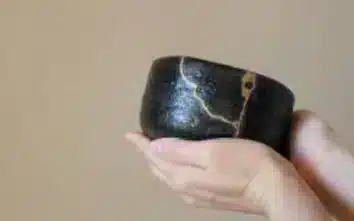
Twee handen houden een kom vast die herstelt werd volgens de kintsugi methode

The art then consists in leaving the cracks and fissures visible and not wanting to hide them, turning them into golden scars, so to speak, that make us stronger, more beautiful and more valuable. We do not need to hide our imperfections and scars because they tell the story of our lives. Comforting thought, isn’t it?

Share this article

Facebook
Twitter
LinkedIn
Pinterest
Email

Check out all of the online courses we offer and dive into the world of clay!

Discover more blog posts here

A ceramic flower pot, glazed with glaze splatters containing a cactus
Techniques
Nele

Splattering glaze

If you’re not into the clean approach, you can go wild with glaze by splashing and splattering it.

The pasta plate in cramic beige rustic
Shapes
Suvi Brissinck

The pasta plate

Nothing tastes better than comfort food served on a homemade ceramic plate. It’s one of the most basic shapes in ceramics, but you can take it in so many different

Een rode, bruine en witte theepot van keramiek op een gebloemd tafelkleed
Shapes
Nele

The teapot

No potter can escape this shape: the tea pot.

learning to throw pottery, learning to throw on the potter's wheel, learning to throw on the pottery wheel, learning to throw ceramics, learning to throw pottery

It’s Cursist’s 5th anniversary, and you get the gift!

  • Take a free mini-course
    ‘Throw your own berry colander’
  • Get 10% off all courses!

Download the free beginner's guide

Start out with ceramics

A handy 27-page PDF with everything you need to know to get started with everything clay.

Enter your details below and you’ll get the guide in your mailbox! You sign up for our bi-weekly newsletter full of ceramic goodies as well.