Why does clay crack?

Clay is a fantastic material. It is durable, strong, and versatile. You can really do anything with it!
Picture of Nele Ostyn
Nele Ostyn

Forever learning.

Clay is a unique material: sturdy, durable and incredibly versatile. The possibilities for creating with it are almost endless.

However, clay also has a property that has ruined many a piece of work: it shrinks when it dries. This can sometimes lead to unsightly cracks in your latest creation. But why does that happen?

What causes cracks in clay?

The different parts of your piece usually dry at different rates. Thin, small shapes dry faster than large, thick ones. For example, you may have noticed that a cup handle dries faster than the cup itself.

This means that different parts of your piece will shrink at different rates. This creates tension in the clay. While the clay is wet and workable, it can withstand this tension. However, once the clay has dried out, cracking is inevitable.

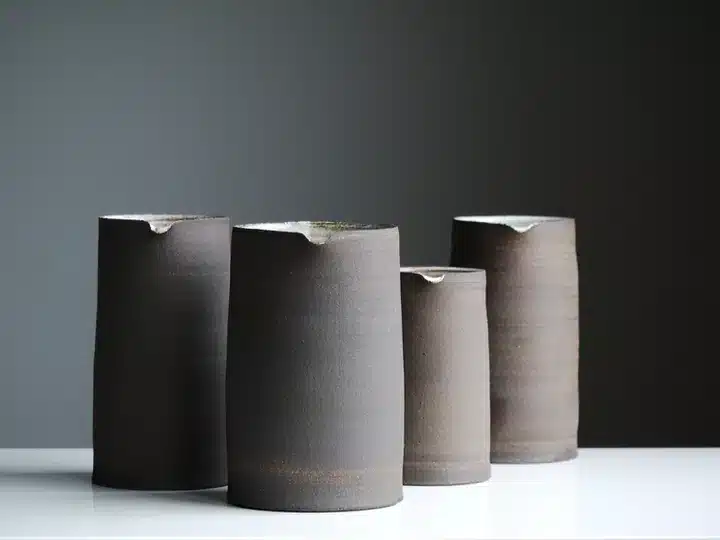
Een set van kannen gemaakt van klei

Not all types of clay crack at the same rate. Clay with high plasticity has smaller particles that the water can bind to more easily. When the water evaporates during drying, more space is created between the clay particles, resulting in greater tension. This increases the chance of cracking.

Clay types with a high moisture content, such as porcelain, crack more quickly. This is because they shrink considerably in a short time when drying out. Consequently, the clay has less time to resist the tension.

High probability of cracking

Certain parts of your piece are more prone to cracking than others. These include handles, decorations and fine details. These parts are not only thinner and therefore dry out faster, but they are also more exposed to the air than the rest of your piece.

If your piece has unevenly thick walls, there is a high risk of cracking. This is because thicker parts dry more slowly than thinner parts. This is also why the base of a bowl or cup is more at risk of cracking than the rim. However, this is not only due to the thickness of the clay, but also to the alignment of the clay particles.

Throwing the clay ensures that its particles become increasingly aligned in the same direction. However, this effect is less pronounced at the base of a bowl. The clay particles remain more or less randomly aligned. Consequently, the base shrinks more slowly than the evenly aligned rest of the bowl. This can lead to cracks.

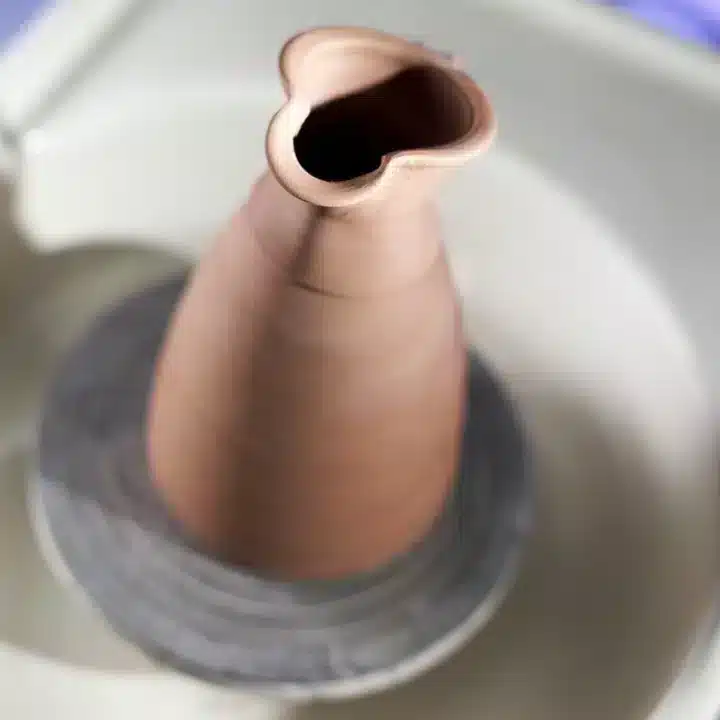
Een hoge kan gemaakt van rode klei op een draaischijf

Finally, you need to consider the moisture content of your clay. Clay that has just been taken out of its packaging may be uneven. Certain spots are more moist than others. Again, this is a recipe for cracks.Good wedging is key! Read this article to learn how to avoid cracks.

Share this article

Facebook
Twitter
LinkedIn
Pinterest
Email

Check out all of the online courses we offer and dive into the world of clay!

Discover more blog posts here

A ceramic flower pot, glazed with glaze splatters containing a cactus
Techniques
Nele

Splattering glaze

If you’re not into the clean approach, you can go wild with glaze by splashing and splattering it.

The pasta plate in cramic beige rustic
Shapes
Suvi Brissinck

The pasta plate

Nothing tastes better than comfort food served on a homemade ceramic plate. It’s one of the most basic shapes in ceramics, but you can take it in so many different

Een rode, bruine en witte theepot van keramiek op een gebloemd tafelkleed
Shapes
Nele

The teapot

No potter can escape this shape: the tea pot.

learning to throw pottery, learning to throw on the potter's wheel, learning to throw on the pottery wheel, learning to throw ceramics, learning to throw pottery

It’s Cursist’s 5th anniversary, and you get the gift!

  • Take a free mini-course
    ‘Throw your own berry colander’
  • Get 10% off all courses!

Download the free beginner's guide

Start out with ceramics

A handy 27-page PDF with everything you need to know to get started with everything clay.

Enter your details below and you’ll get the guide in your mailbox! You sign up for our bi-weekly newsletter full of ceramic goodies as well.