What happens to old clay?
Actually, not much can go wrong with clay. There are only two possibilities. If the environment is humid enough, mould can develop. If the environment is not humid enough, the clay can dry out. In both cases, there is no need to panic because the clay is still perfectly usable. You will just need to put in a little extra effort before you can start working with it.
Mould on your clay is absolutely harmless. Once your piece is in the kiln, the mould will burn away anyway. In fact, some potters even prefer mouldy clay because it is slightly more malleable. However, if you would prefer to remove the mould, you can simply cut away the affected parts of your clay. Read this blog post to find out more about how to deal with mouldy clay.
Then there is dried-out clay. All clay, whether old or new, will dry out and harden over time. The solution is simple: add water! There are several methods for doing this. For example, you can use a spray bottle to add water little by little. Alternatively, you can wrap the clay in a wet towel or poke a few holes in it and pour water into them. Every potter has their own method. Read more about how to make dried-out clay usable again.
No matter which method you use, make sure you don’t add too much water all at once. Otherwise, your clay may become too wet and lose its shape. Also, wedge the clay thoroughly afterwards to ensure the moisture is evenly distributed. Only then will your clay be ready for use again.
How do you store your clay?
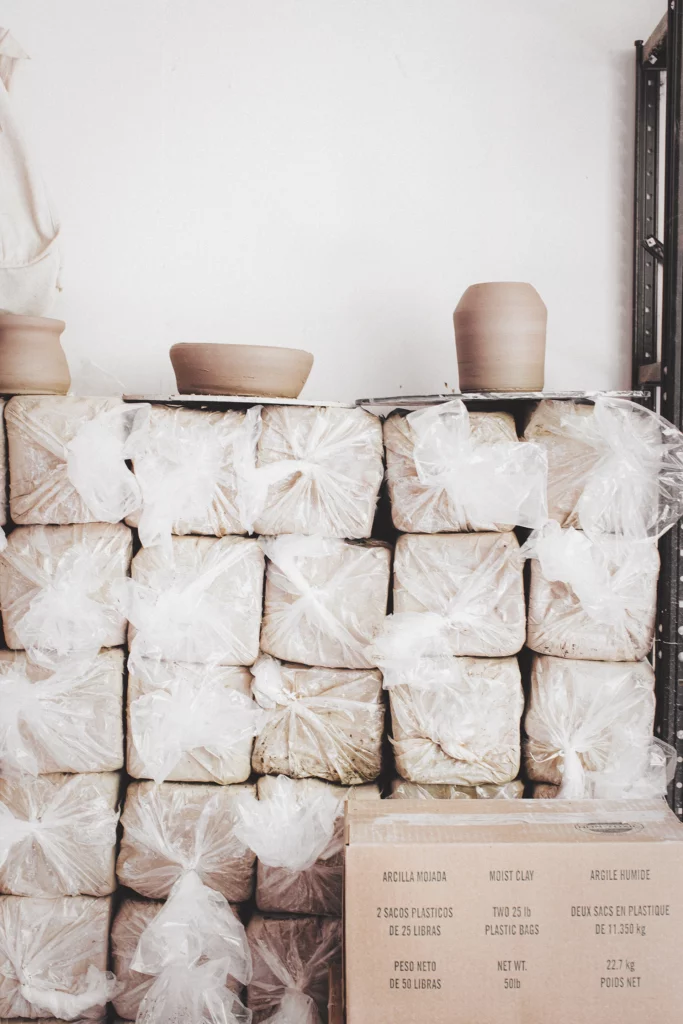
Clay is best stored in a cool, dark place. However, it should not be too cool, as this can cause it to freeze. Don’t panic if this happens, though, because your clay is still usable. It will just take a while before you can start working with it again. You have to let the frozen clay thaw slowly by adding water little by little until it is workable again. It’s a long process.
Choose a cool place, but not too cold. Make sure your clay is well wrapped so that it cannot dry out. One good method is to put the clay in a double plastic bag and then store it in a plastic box with a lid. This prevents oxygen from reaching the clay, reducing the chance of mould growing.
As you can see, clay is quite resilient. So you don’t have to worry about it becoming unusable. However, it may take a little extra effort to prepare it for use.